

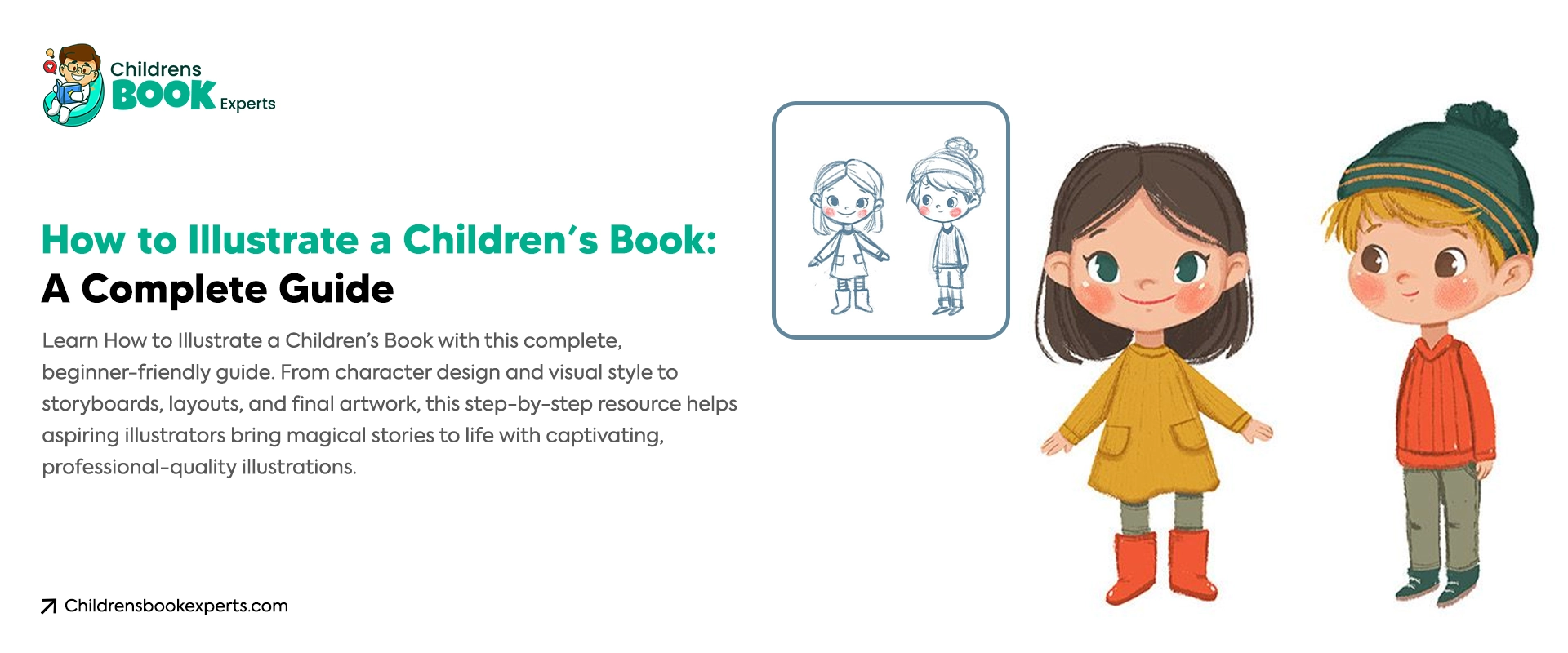
Key Takeaways
- Illustrations help children understand and enjoy the story.
- Plan your scenes and characters before you start drawing.
- Choose a style that matches your story. For example, cartoons, watercolors, comics, or digital.
- Keep characters simple, consistent, and expressive.
- Make layouts clear and easy to follow.
- Follow a step-by-step illustration process: sketch, line art, color, and final edits.
- Both traditional and digital methods work; therefore, pick what feels comfortable.
- Test your illustrations with kids to see what works best.
Have you ever dreamed of bringing magical stories to life through pictures? Learning how to illustrate a children’s book is an exciting adventure that combines creativity, storytelling, and a whole lot of heart. Whether you’re just starting out or looking to improve your skills, this guide will walk you through everything you need to know about illustrating children’s books.
Understanding What Are Illustrations in a Book
Before jumping into the creative process, it’s helpful to understand the basics. Illustrations in a book are visual elements that work alongside text to tell a story. Moreover, in children’s books, these pictures often do more than just decorate the pages. They help young readers understand the story, connect with characters, and spark their imagination.
Children’s book illustrations are special because they speak directly to young minds. Additionally, these images create lasting memories that kids carry with them long after they’ve finished reading. Therefore, learning how to illustrate a children’s book requires both artistic skills and a clear understanding of what captures a child’s attention.
Choosing the Right Children’s Book Illustration Style
One of the most exciting parts of creating a children’s book is developing your illustration style. Choosing the right style is important because each story has its own mood and needs. Understanding how to illustrate a children’s book starts with picking up a style that brings your story to life.
Here are some popular illustration styles:
Watercolor and Painterly Styles:
These illustrations are soft, dreamy, and full of texture. They work beautifully for gentle stories, fairy tales, or books that explore emotions.
Cartoon and Comic Styles:
Bold lines and expressive characters make cartoon illustrations fun and lively. They are perfect for funny stories, adventures, or action-packed tales.
Minimalist Styles:
Sometimes, less is more. Using simple shapes and a limited color palette can create striking images while letting children’s imaginations fill in the details.
Digital Art:
Digital tools give you incredible flexibility. You can mimic traditional styles or experiment with new ones, making revisions easy and allowing you to explore your creativity fully.
There’s no single “right” style. The key is to choose one that supports your story. For example, if your book is about a brave little puppy, a playful cartoon style might be perfect. If your story focuses on nature or emotions, a soft, painted look could work better.
Many authors hire professional children’s book illustrators when they want a specific look for their story. This is because learning how to illustrate a children’s book is all about matching your art to the story and making it enjoyable for young readers.
Planning Your Artwork: A Smooth Start for Beginners
Understanding how to illustrate a children’s book begins with careful planning. Before you draw anything, read your manuscript and highlight scenes that matter most. Planning saves time and helps you avoid redoing pages later.
A simple planning method includes:
- Reading the story with full attention
- Listing key scenes
- Identifying moments that need full-page illustrations
- Thinking about how pictures will support text
- Checking how movement flows from page to page
Planning early keeps you confident during the rest of the process.
Character Design for Children’s Books
Strong characters help children remember your story long after they put the book down. Because of this, character design for children’s books is one of the most important parts of the illustration process.
When designing your characters, try to:
- Keep shapes simple
- Use clear expressions
- Maintain consistency in size and proportions
- Choose colors that match your personality
- Practice different poses
If you find it difficult to draw characters consistently from every angle, you are not alone. Many authors face this struggle and often hire cartoon illustrators or comic illustrators so their characters look the same on every page.
Book Illustration, Composition and Layout for Kids’ Books
Once your characters are ready, it is time to think about book illustration composition and layout for kids’ books. Layout controls how readers move through each page. If your layout feels confusing, kids will lose track of the story, so simple and clear placement matters a lot.
Begin with these layout tips:
- Keep the focus on the main action
- Avoid clutter
- Leave enough breathing space
- Balance text with images
- Use direction in your artwork to guide reading flow
Remember, a good layout helps your book feel smooth, enjoyable, and easy to follow.
Children’s Book Illustration Process
Understanding the children’s book illustration process from sketching to final edits is crucial for authors and artists alike. It helps you stay organized and meet deadlines. Here is how most artists work:
-
Reading and planning
The illustrator studies the manuscript and takes notes. This helps them choose the story’s tone and visual direction.
-
Character design
This step includes early sketches, experimenting with shapes, and testing how the character looks in different poses.
-
Thumbnail sketches
Illustrators create small page layouts to decide where scenes begin and end.
-
Storyboard or roughs
This stage includes rough drawings of every page. Authors often approve this stage before the final artwork begins. Many artists also offer storyboard illustration service to help authors decide on pacing and flow.
-
Final line art
Once the roughs are approved, the illustrator draws clean outlines.
-
Color and texture
The artwork gets painted or colored. If the artist is working digitally, they use layers, brushes, and color palettes that support the story’s theme.
-
Final edits
The illustrator checks consistency, color balance, and readability.
Many authors prefer hiring experienced illustrators because they know how to handle each stage with ease.
Traditional vs Digital Children Book Illustration
When you’re learning how to illustrate children’s book projects, you’ll need to decide between traditional and digital methods. Both have their advantages, and many illustrators use a combination of both.
Traditional illustration uses physical materials like paint, pencils, or markers. These methods offer unique textures and a hands-on creative experience. However, they can be harder to revise and require scanning for children book publication.
Digital art in children’s book illustrations happen on a computer or tablet using software. This approach makes it easy to try different colors, undo mistakes, and make changes quickly. Additionally, digital files are already in the right format for publishing.
Many successful illustrators start with traditional sketches, then scan and finish them digitally. This hybrid approach combines the warmth of hand-drawn art with the convenience of digital tools. Therefore, you don’t have to choose just one method.
Kids Book Illustration Tips for Beginners
If you are new to illustrating a book, these friendly tips will help:
- Keep characters consistent by using reference sheets.
- Use color to show mood. Warm colors feel energetic while cool colors feel calm.
- Study real children and animals to understand expressions and body language.
- Avoid too many tiny details. Young readers understand bold and simple visuals better.
- Practice drawing scenes with clear storytelling. One picture should communicate the idea quickly.
- Try different children’s book illustration styles to find your comfort zone.
- Save your colour palette early, so your book stays visually consistent.
- Test your illustrations by asking a child or parent for feedback.
Even small adjustments can help you bring the story to life in a way that feels warm and inviting.
Final Thoughts
Learning how to illustrate a children’s book is a rewarding journey. With the right steps, friendly characters, thoughtful layouts, and a clear process, you can bring any story to life. Whether you prefer traditional painting or doing digital art for children’s book illustration, your visuals will shape how children remember your story.
Every page is a chance to make a child smile. So take your time, enjoy the process, and let your imagination guide you as you move from the first sketch to the final artwork.
Furthermore, if you are planning to publish or need professional help, you can contact Children’s Book Experts, where authors get every type of children’s book service, from book cover illustration and cartoon illustration to children’s book publication.
Let your story shine through pictures and create a book children will love to read again and again.
Frequently Asked Questions
What are illustrations in a children’s book?
Illustrations are images that help tell a story, making it easier for children to understand, enjoy, and connect with the characters.
How do I start illustrating a children’s book?
Start by reading your story, planning key scenes, and creating character sketches. Then experiment with layouts and styles before moving to final artwork.
What are popular children’s book illustration styles?
Common styles include watercolor, cartoon, comic, minimalist, and digital art. Choose a style that fits your story and engages young readers.

